
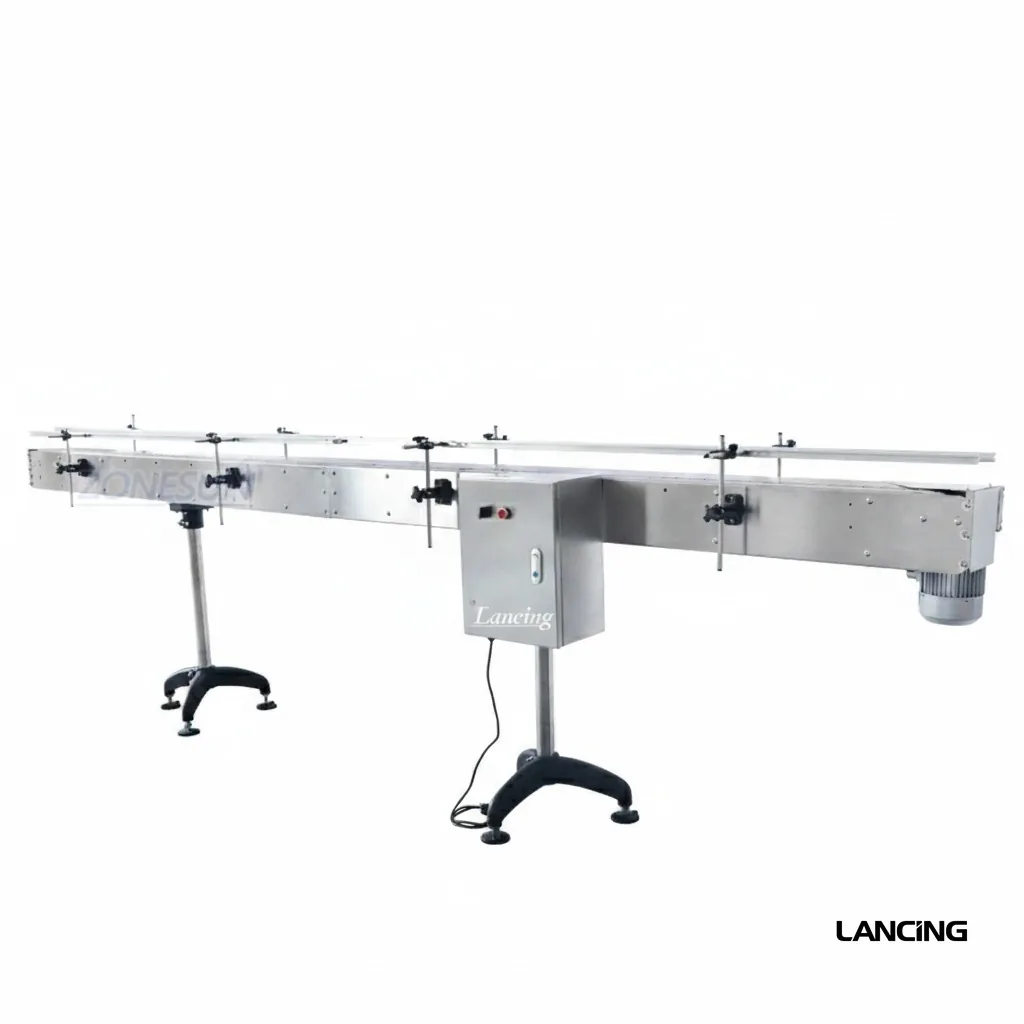
Conveyor type
Belt Conveyor Systems
Flat belt, food-grade, cleated and modular belt conveyors for product transfer, packing and line linking.
Good for cartons, packs and components that need full-base support.
Explore belt conveyor systems →Container movement and line stability
Bottle handling conveyors must keep containers upright, correctly guided and consistently spaced through filling, capping, labelling, coding and packing stages.
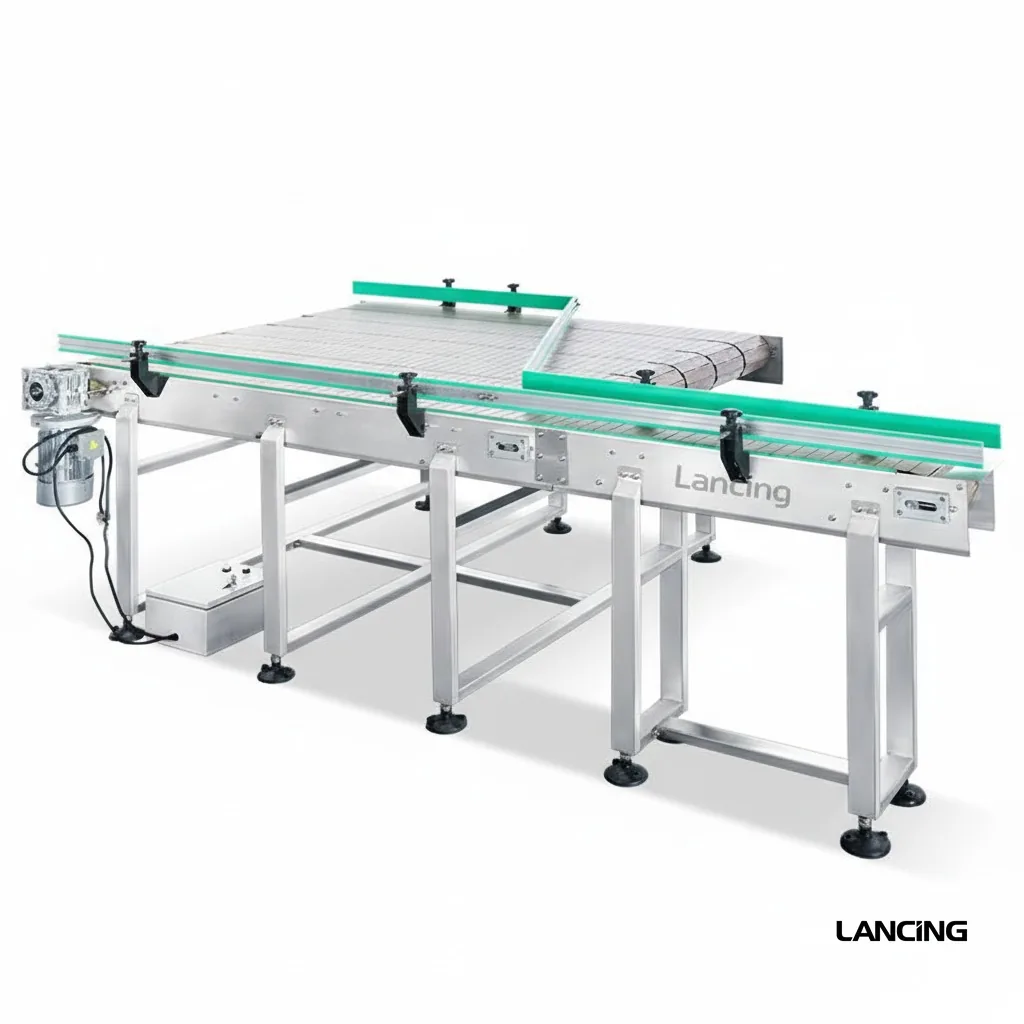
Specification notes
Bottle lines need special attention because the product is often tall relative to its base, sensitive to guide settings and affected by pressure in accumulation. A stable conveyor route can reduce fallen bottles, label damage, missed caps and line stoppages.
Slat chain conveyors are a common choice for bottles and jars, particularly when the line includes curves, infeed areas, outfeed routes or rotary accumulation tables. The choice should still be checked against bottle diameter, height, material, weight, fill level and speed.
Good bottle handling starts with samples, dimensions and a clear line route. The conveyor must be matched to the container and the neighbouring machines, not selected by width alone.
Best used for
Available routes
Frequently asked questions
Bottle conveyors need controlled side guidance, stable transfer points and careful accumulation pressure because upright containers can tip or scuff.
Often yes, but guide adjustment, transfer width and smallest bottle stability must be checked.
Send height, diameter, material, empty and filled weight, base shape, cap or closure type, label area and speed target.
Need a shortlist?
We will help narrow the conveyor type, layout considerations and the details needed for a practical quotation.
Related conveyor options
Conveyor type
Flat belt, food-grade, cleated and modular belt conveyors for product transfer, packing and line linking.
Good for cartons, packs and components that need full-base support.
Explore belt conveyor systems →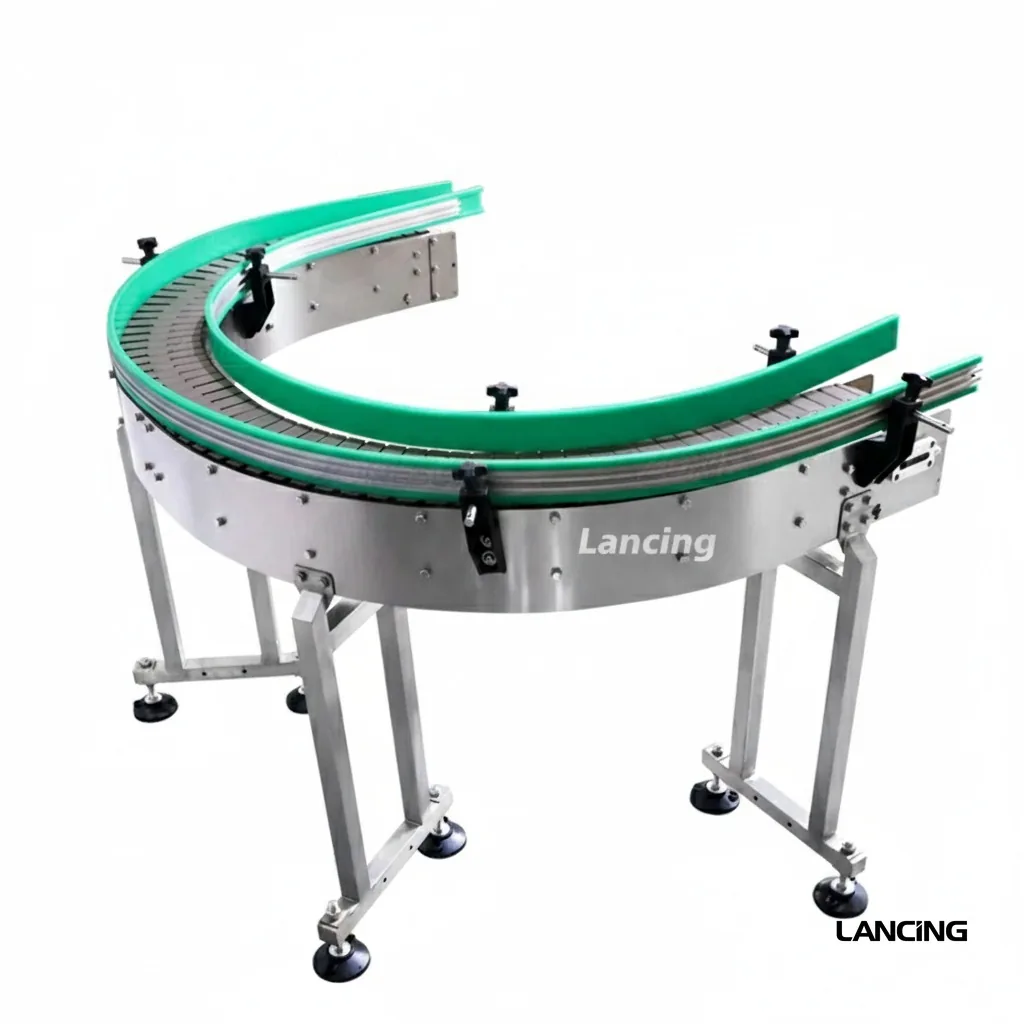
Conveyor type
Plastic slat, tabletop chain and stainless-frame conveyors for bottles, jars and container handling.
Good for bottles, jars and containers that need stable guided movement.
Explore slat chain conveyors →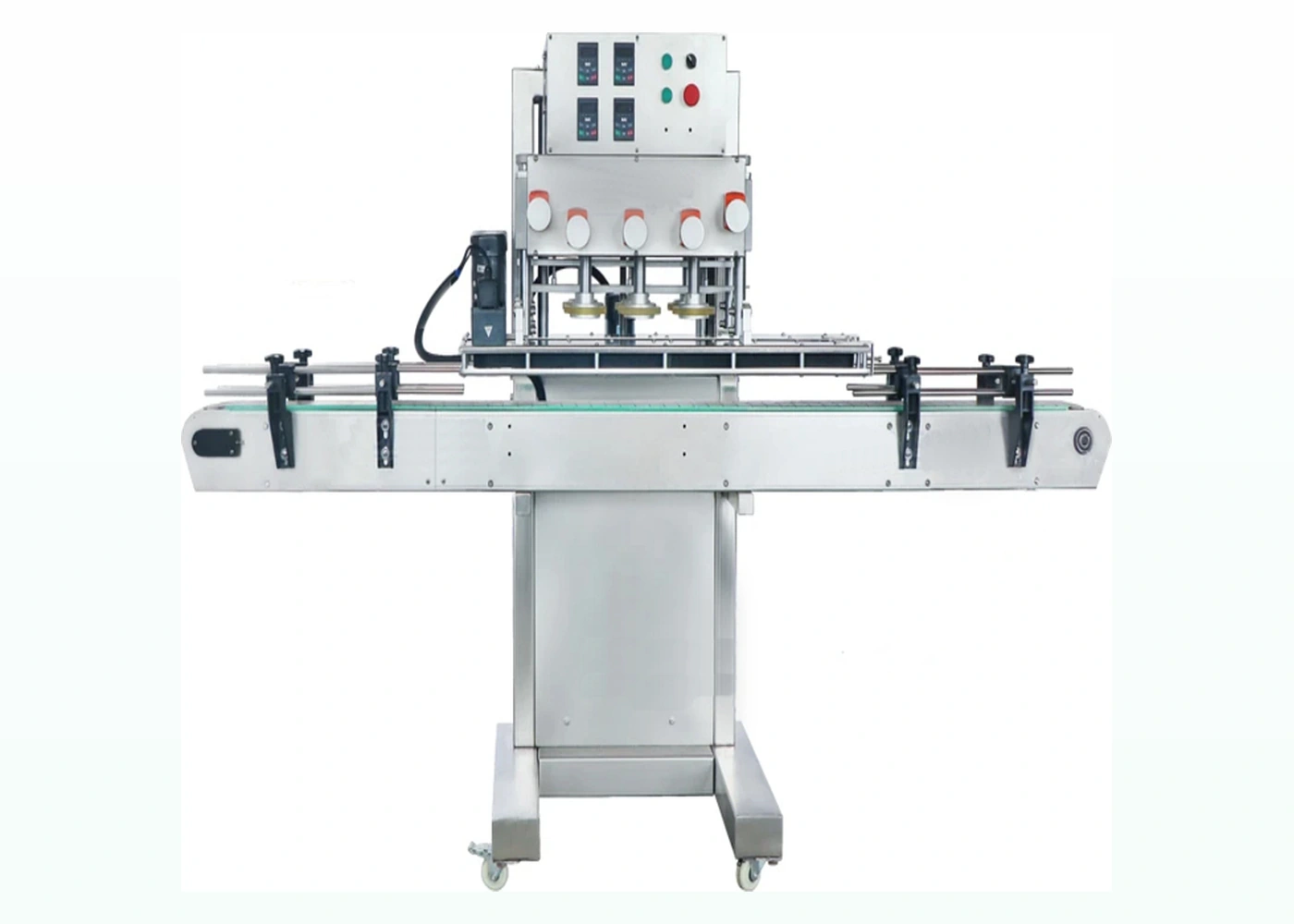
Conveyor type
Motorised roller conveyor sections for cartons, trays, totes, boxes and controlled product movement.
Good for cartons, trays, totes and boxes with a firm base.
Explore powered roller conveyors →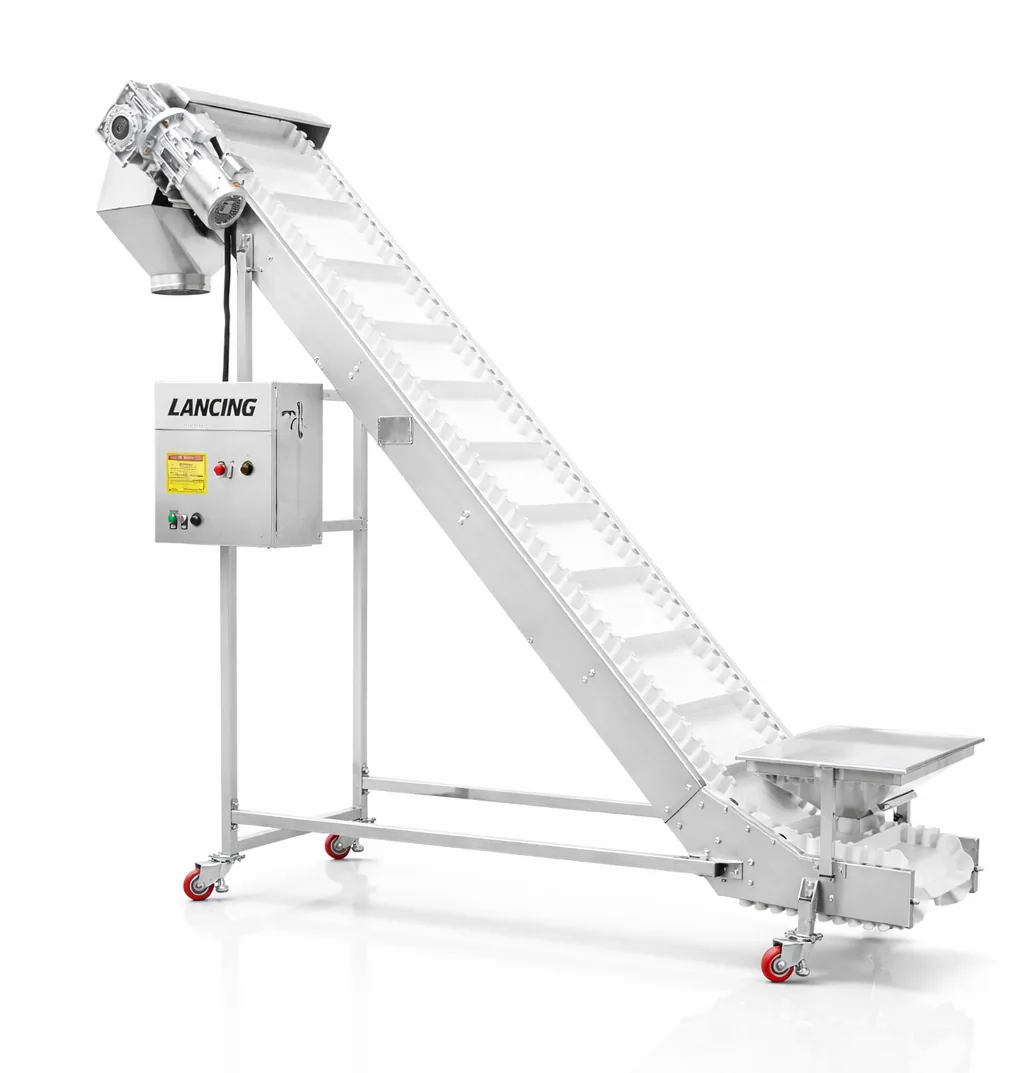
Conveyor type
Incline and elevator conveyors for moving packs between heights without disrupting line flow.
Good for moving products between heights while keeping the line flowing.
Explore incline conveyors →Bottle handling questions
Bottle capacity alone is not enough to define conveyor suitability. Base geometry, height, centre of gravity, closure, label, fill state and contact with guides all influence how a bottle moves through the line.
Empty bottles are lighter and can be more sensitive to vibration, air movement, guide contact and sudden speed changes. Filled bottles may be more stable but place higher load on the conveyor and can behave differently during stopping, curves and accumulation. Part-filled containers may introduce liquid movement that changes the centre of gravity during acceleration.
The line should be reviewed in the actual product states encountered between each process, not as one generic bottle.
The load-bearing base diameter or footprint, heel shape, height, centre of gravity, wall flexibility, shoulder profile, closure or pump projection and the intended guide contact points usually matter more than nominal volume. Label finish and scuff sensitivity can also determine whether contact accumulation is acceptable.
Dimensioned drawings are useful, but physical samples reveal moulding variation, flexibility and real surface behaviour.
A multi-format bottle line needs repeatable guide positions, known sensor settings, controlled transfer adjustments and a recorded changeover sequence. Scales, mechanical stops, format parts or validated recipes may be appropriate depending on the design, but every adjustment should have a reference rather than relying on operator judgement alone.
The widest adjustment range is not automatically the best solution if it creates weak support or difficult access at one end of the product range.
Use the multi-format conveyor guide and the changeover guide.
Accumulation can increase damage or instability when bottles contact each other under line pressure, guides create concentrated rubbing, labels or decoration are vulnerable, closures interlock, or tall containers are held in a long queue. Empty and part-filled states may be more sensitive than the final pack.
Test the intended hold time, queue length, release and restart with representative bottles. If contact is unacceptable, separated zones or another buffer method should be considered.
See the powered conveyor questions hub for related sample and accumulation guidance.
Movement evidence
First-party footage can show the visible support surface, guide lane and product spacing. It cannot establish suitability for another container or operating state without measured settings and representative product trials.