
Conveyor type
Belt Conveyor Systems
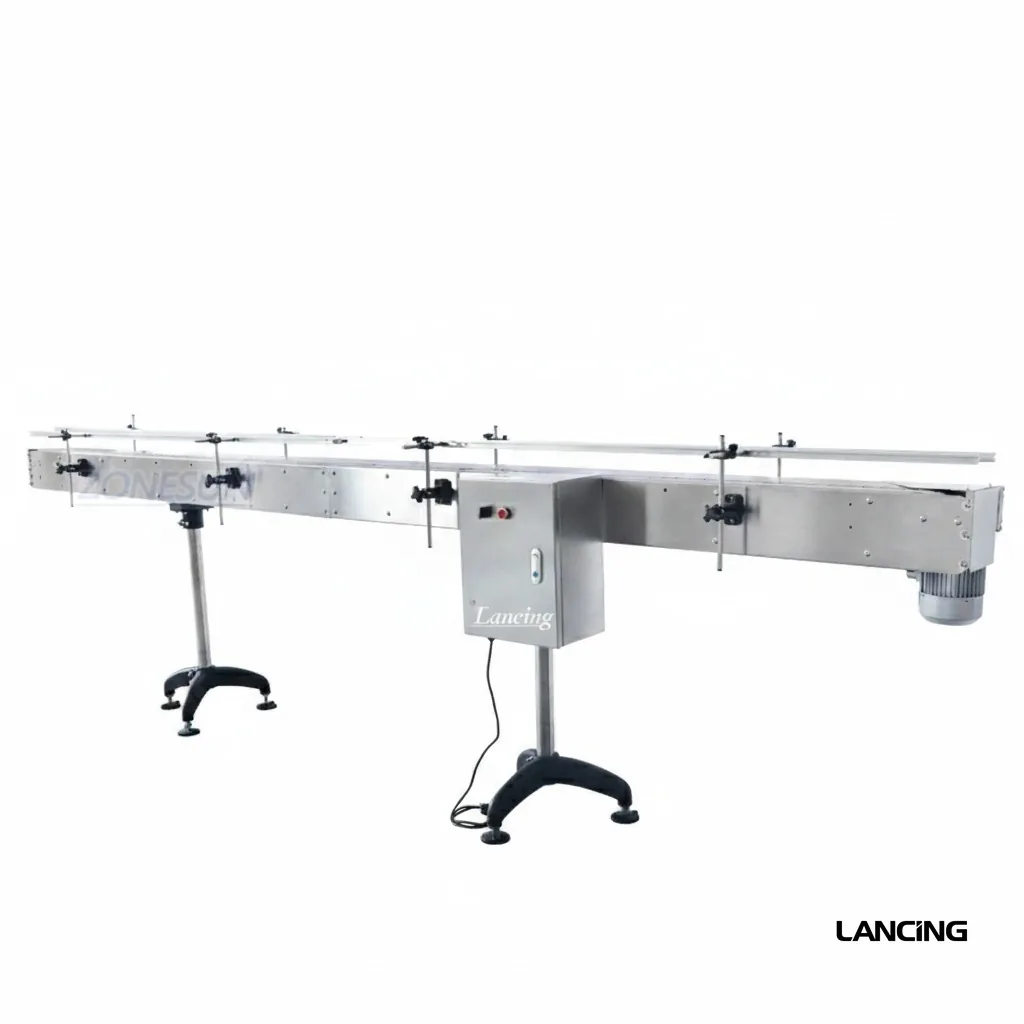
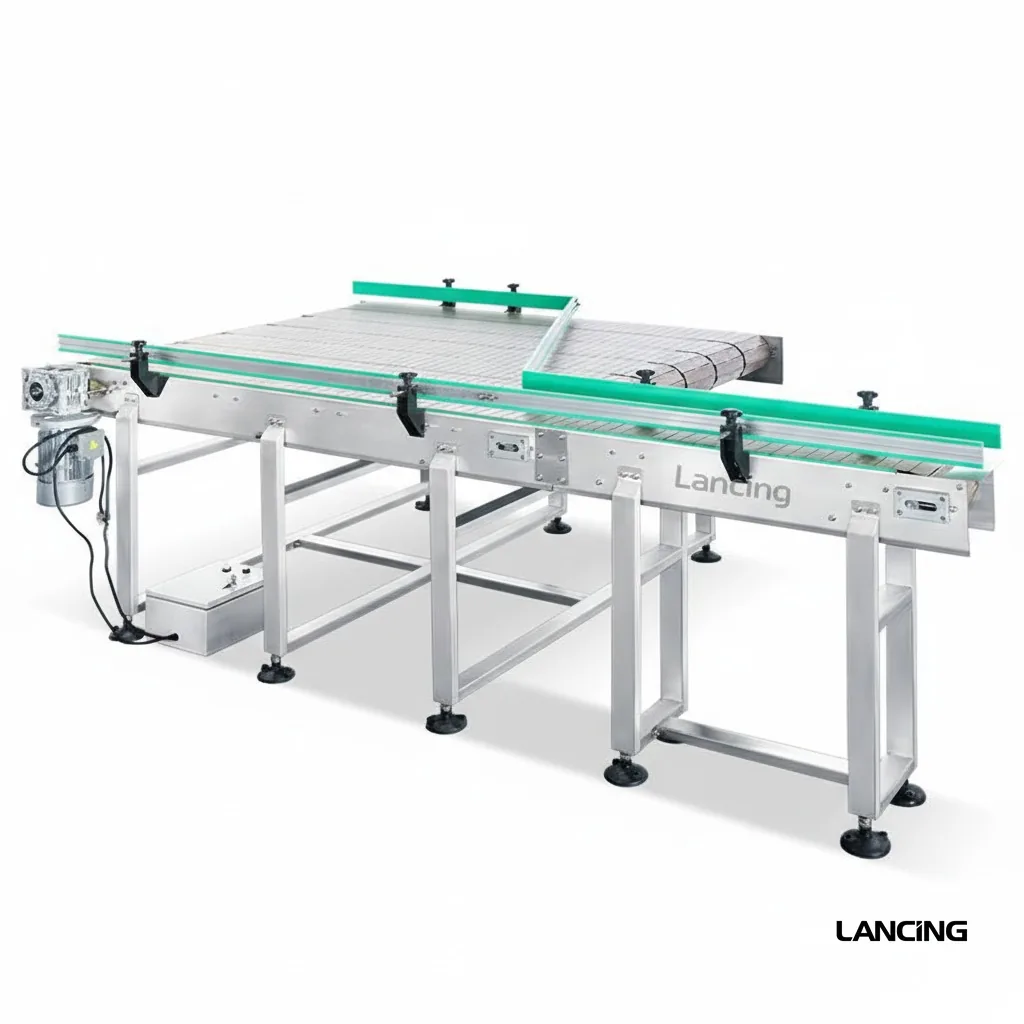
Flat belt, food-grade, cleated and modular belt conveyors for product transfer, packing and line linking.
Good for cartons, packs and components that need full-base support.
Explore belt conveyor systems →Powered conveyors, line linking and accumulation
Conveyor systems specified around the product, line layout and output target — from stand-alone powered conveyors to integrated packaging-line transfer, accumulation and outfeed systems.
Real conveyor equipment
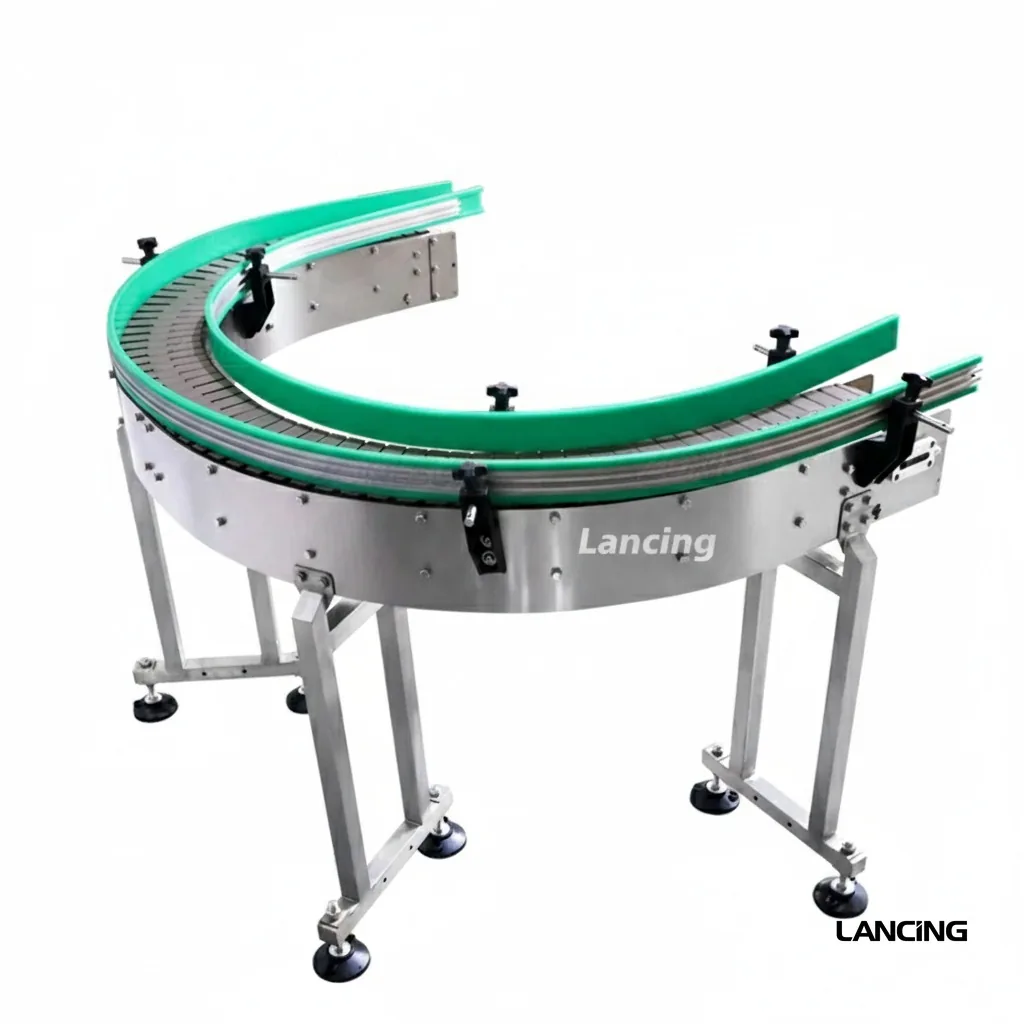
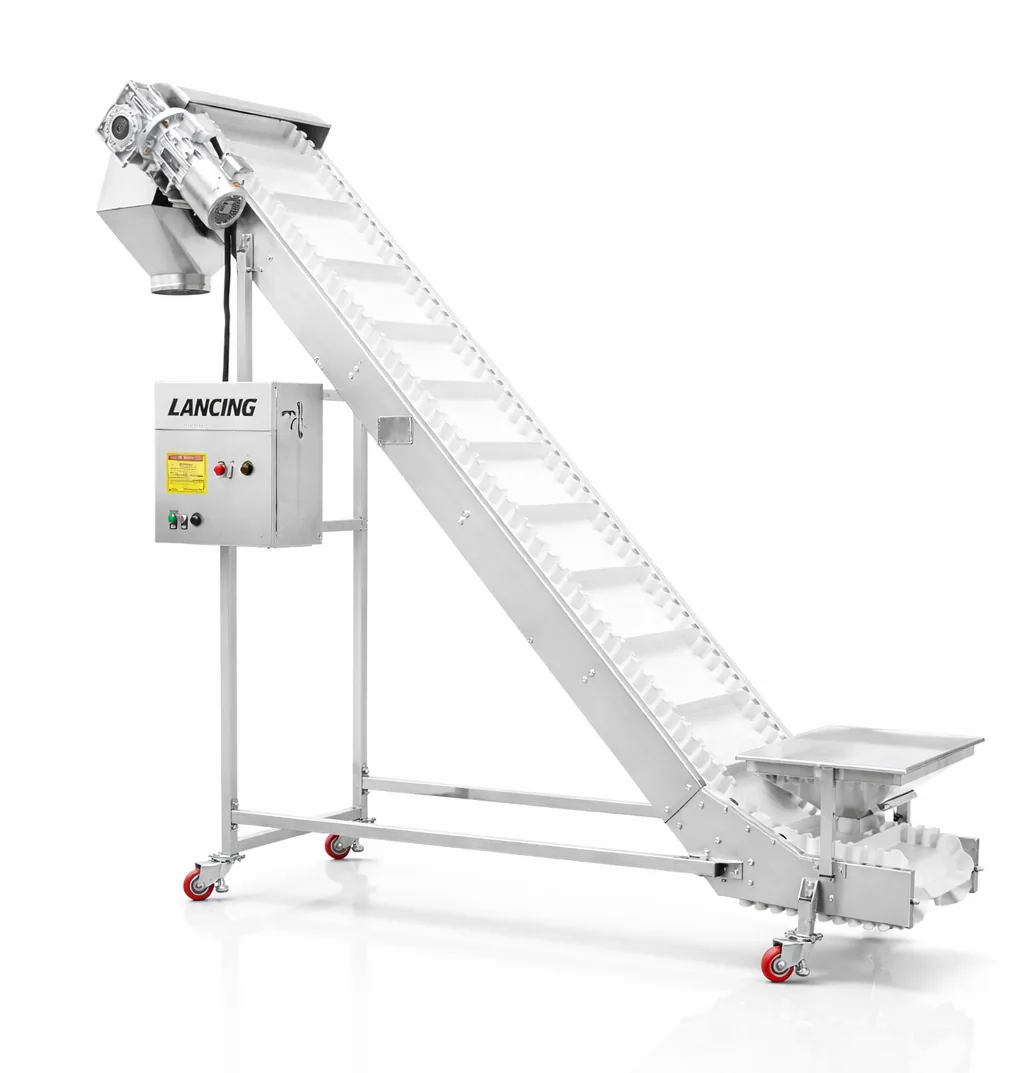
Compare real conveyor styles for moving products, linking machines and improving line flow, including straight powered conveyors, curved slat-chain routes, infeed and outfeed conveyors, incline transfer and machinery integration.
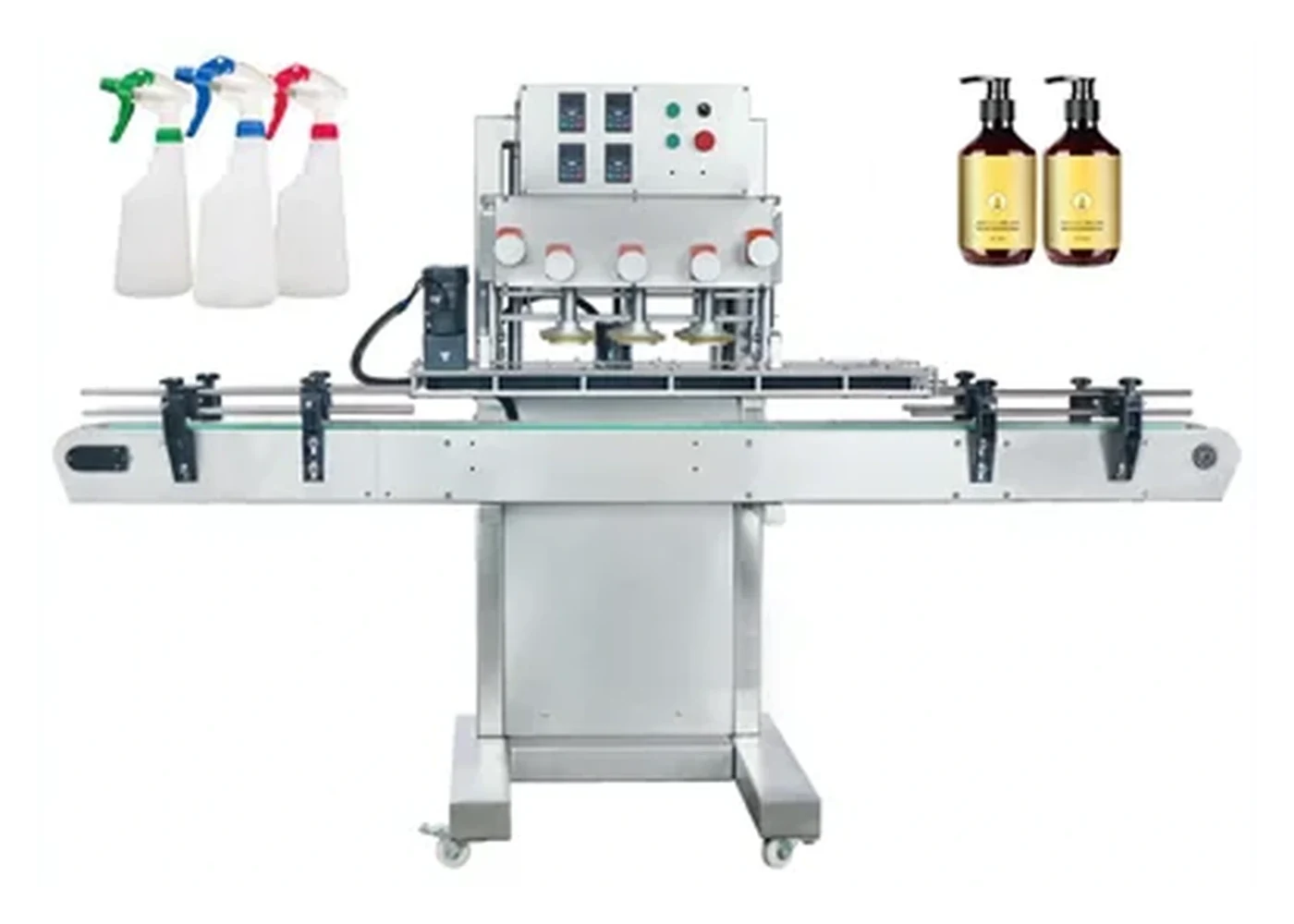
Conveyor types
Start with the conveyor family that best matches your product, route and operating environment. Each option explains where it works well and what to check before requesting a quote.
Conveyor type
Flat belt, food-grade, cleated and modular belt conveyors for product transfer, packing and line linking.
Good for cartons, packs and components that need full-base support.
Explore belt conveyor systems →Conveyor type
Plastic slat, tabletop chain and stainless-frame conveyors for bottles, jars and container handling.
Good for bottles, jars and containers that need stable guided movement.
Explore slat chain conveyors →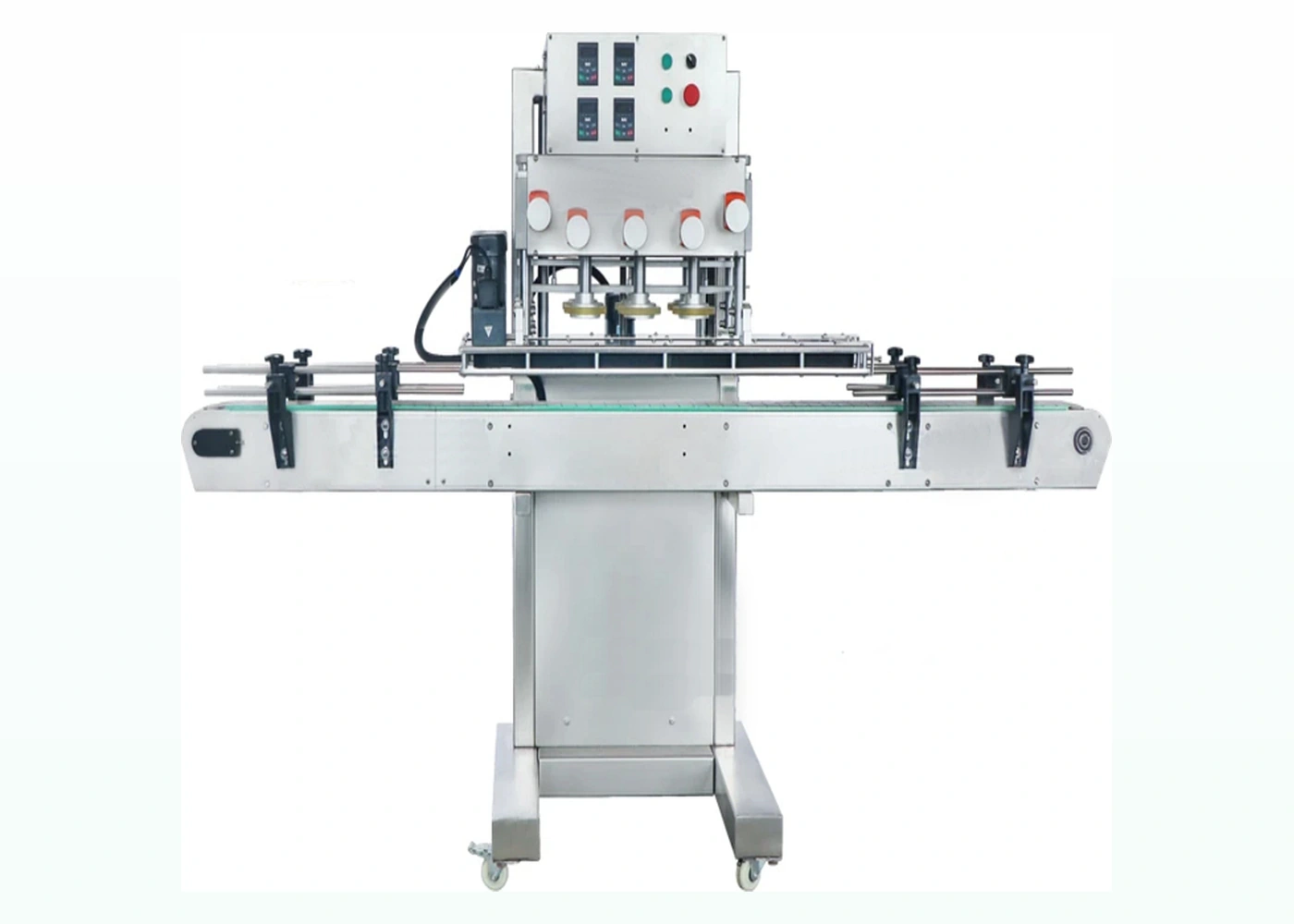
Conveyor type
Motorised roller conveyor sections for cartons, trays, totes, boxes and controlled product movement.
Good for cartons, trays, totes and boxes with a firm base.
Explore powered roller conveyors →Conveyor type
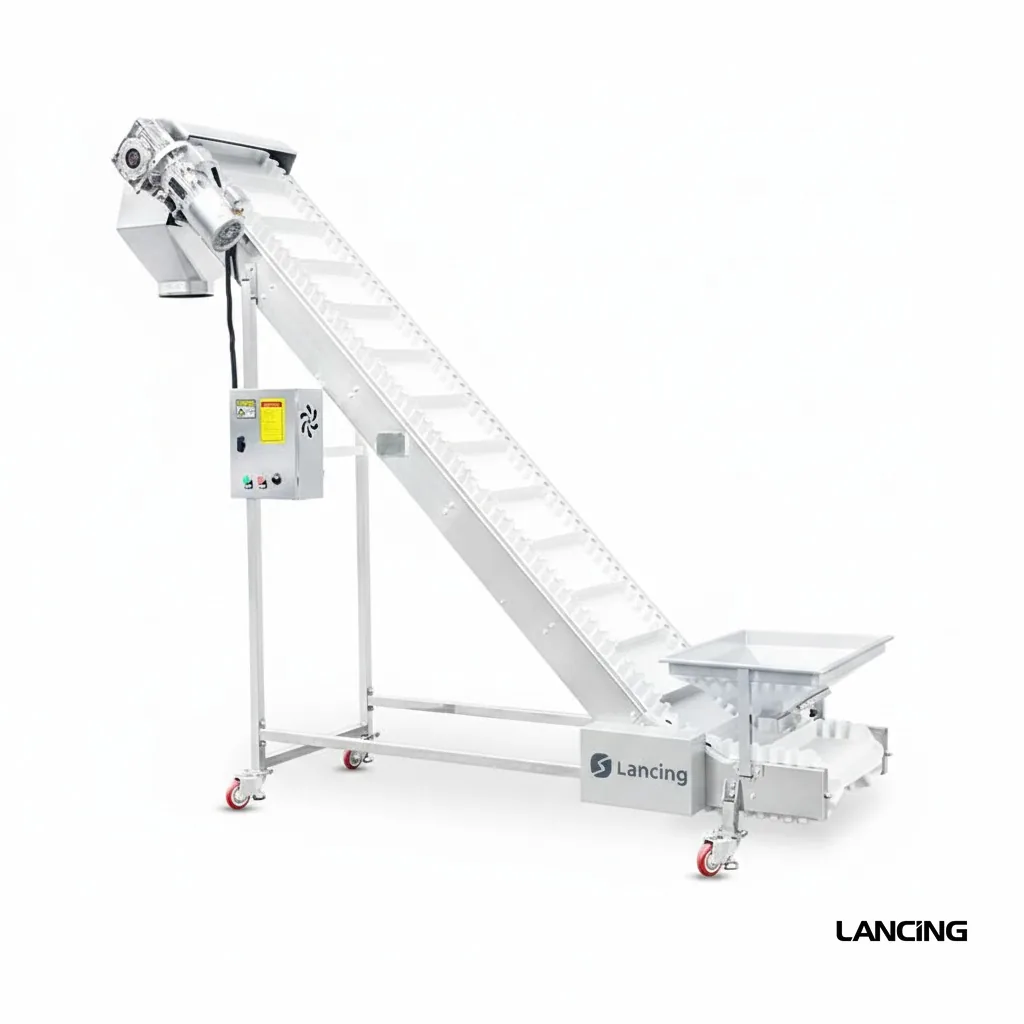
Incline and elevator conveyors for moving packs between heights without disrupting line flow.
Good for moving products between heights while keeping the line flowing.
Explore incline conveyors →Conveyor type
Curved, U-shape and bend conveyors for changing line direction in restricted production space.
Good for changing direction where floor space is restricted.
Explore curved conveyors →Machine infeed/outfeed
Stable infeed, discharge and outfeed conveyors for fillers, cappers, labellers, coders and inspection systems.
Good for controlled transfer into and out of fillers, cappers and labellers.
Explore infeed & outfeed conveyors →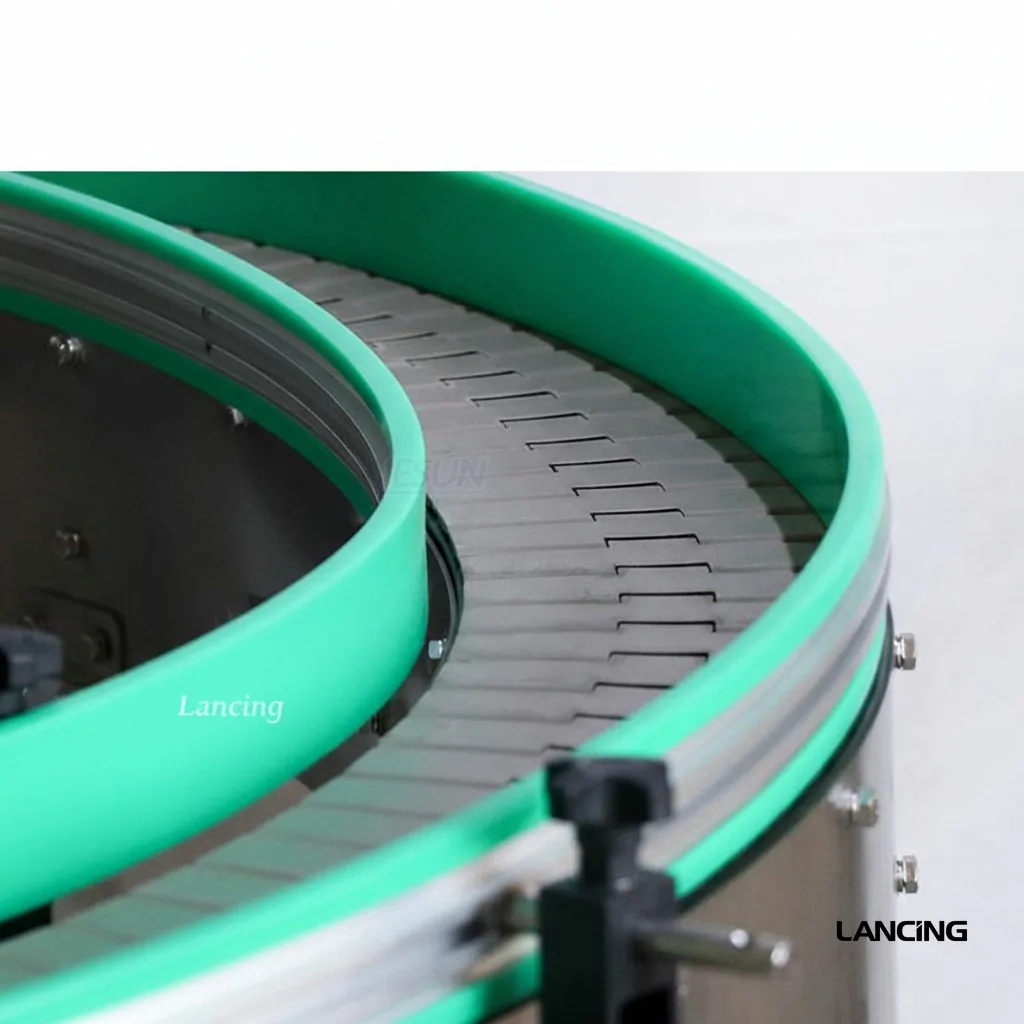
Buffering and spacing
Accumulation, buffering and spacing systems that help production continue through short machine interruptions.
Good for short buffers that reduce stoppages and keep products moving.
Explore accumulation conveyors →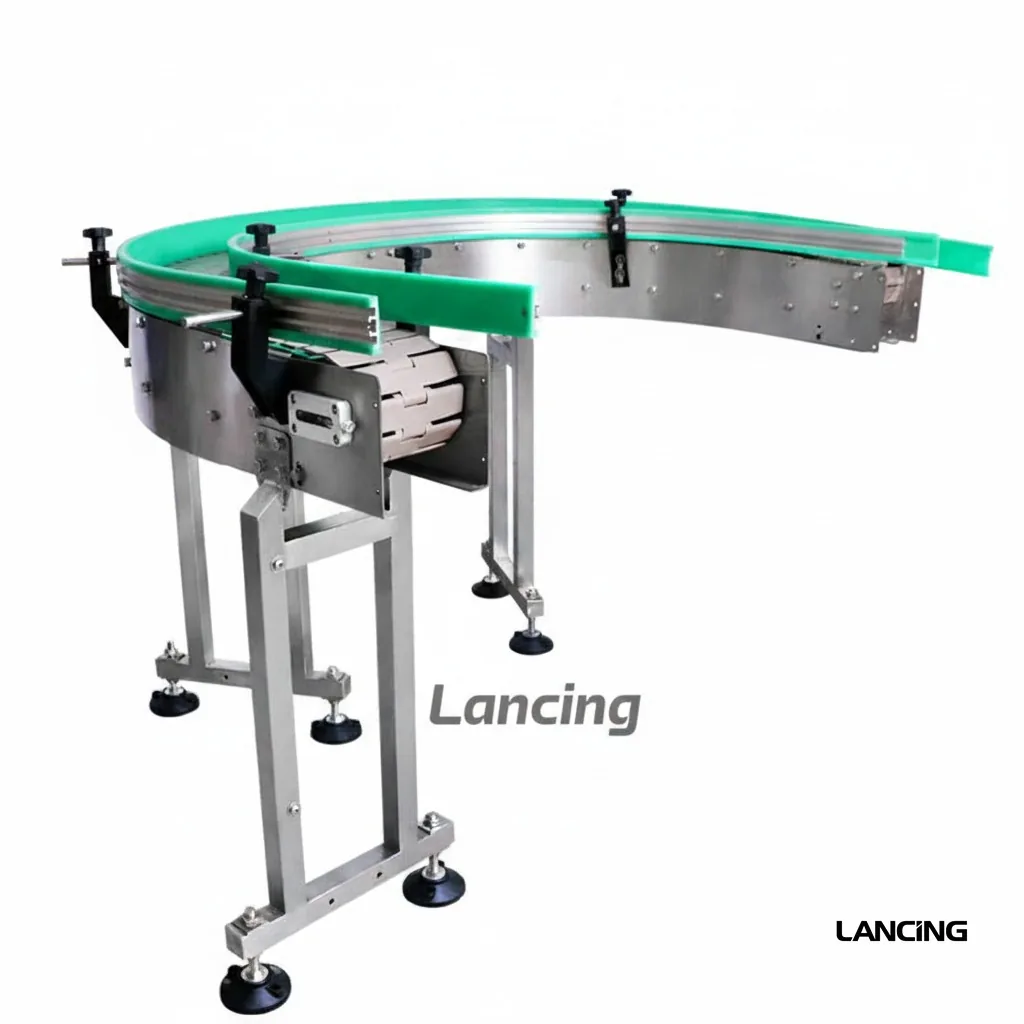
Compact accumulation
Rotary tables and lazy-susan accumulation routes for bottles, jars and small packs before or after machinery.
Good for compact buffering of bottles, jars and smaller packs.
Explore rotary accumulation tables →Conveyor planning
A conveyor can look simple on a drawing, but line performance depends on product stability, spacing, transfer height, incline angle, accumulation pressure, guide adjustment and the interfaces to neighbouring machines.
You can start with a broad handling problem or a specific conveyor type. We will help narrow the specification around product stability, floor space, transfer points, controls and the line speed you need.
Solutions
Choose by the production problem you need to solve, such as line linking, bottle handling, carton transfer, accumulation or an upgrade to an existing conveyor route.
Packaging lines
Conveyor systems for filling, capping, labelling, coding, inspection and packing lines.
Good for linking filling, capping, labelling, coding and packing stages.
Explore packaging line conveyors →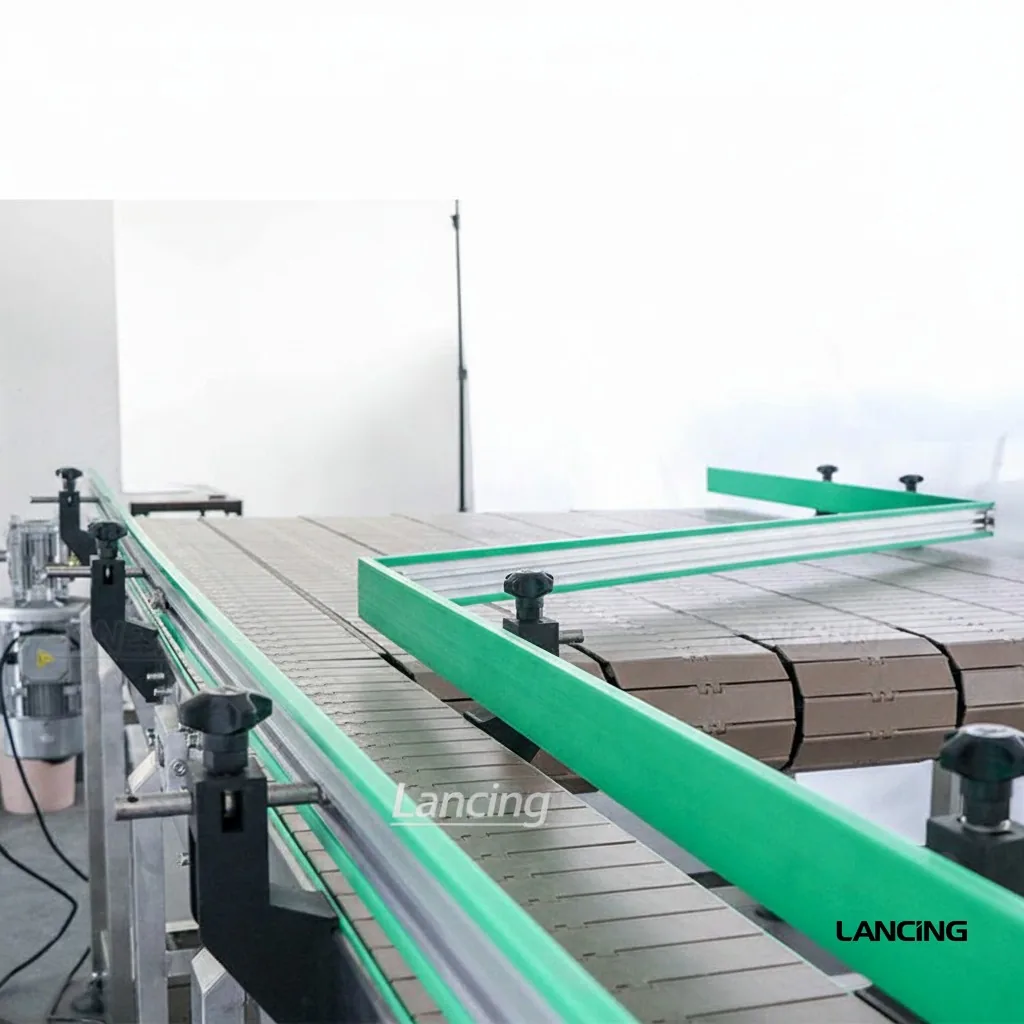
Bottle and jar handling
Slat, infeed, curved and accumulation conveyors for plastic bottles, glass bottles, jars and containers.
Good for stable movement of plastic bottles, glass bottles, jars and containers.
Explore bottle handling conveyors →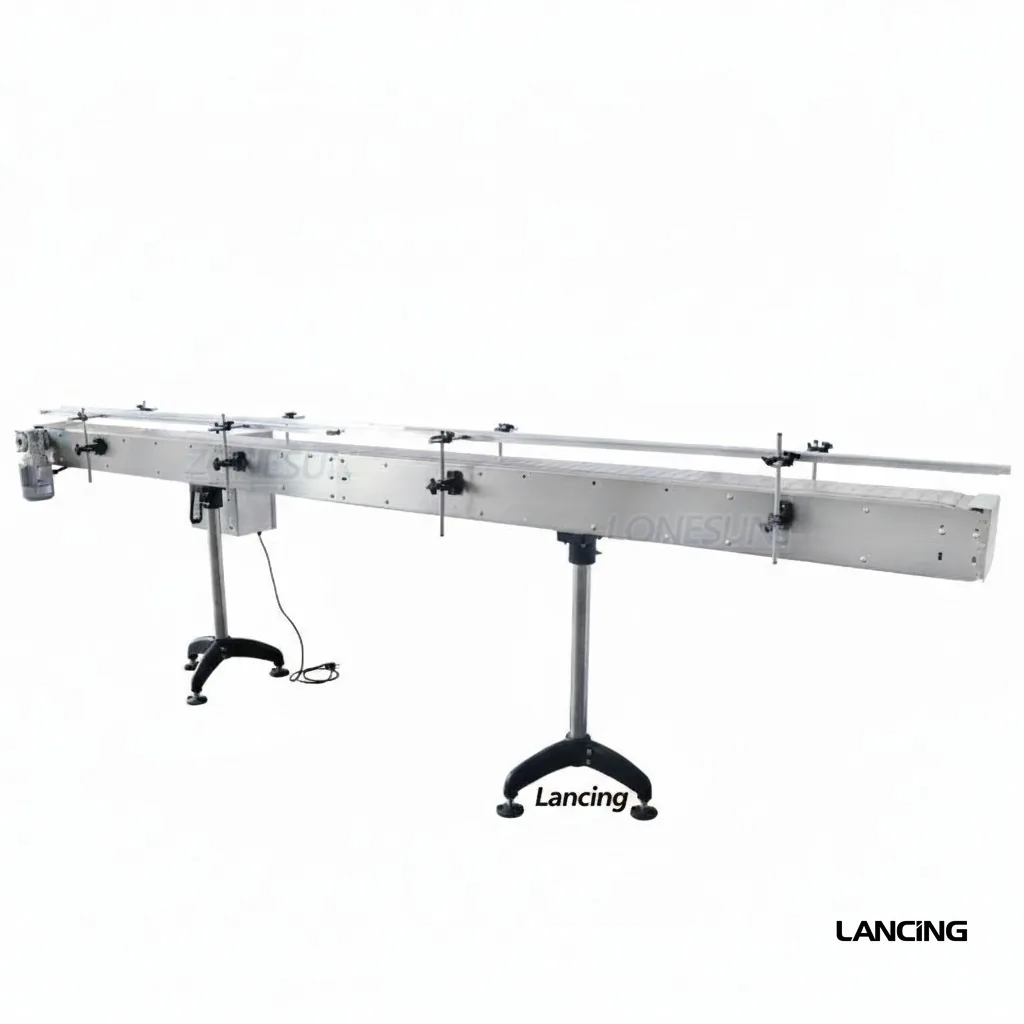
Cartons, trays and boxes
Powered conveyors for flat-bottomed cartons, trays, totes and box handling in production and packing areas.
Good for cartons, trays, totes and boxes in packing and dispatch areas.
Explore carton, tray & box conveyors →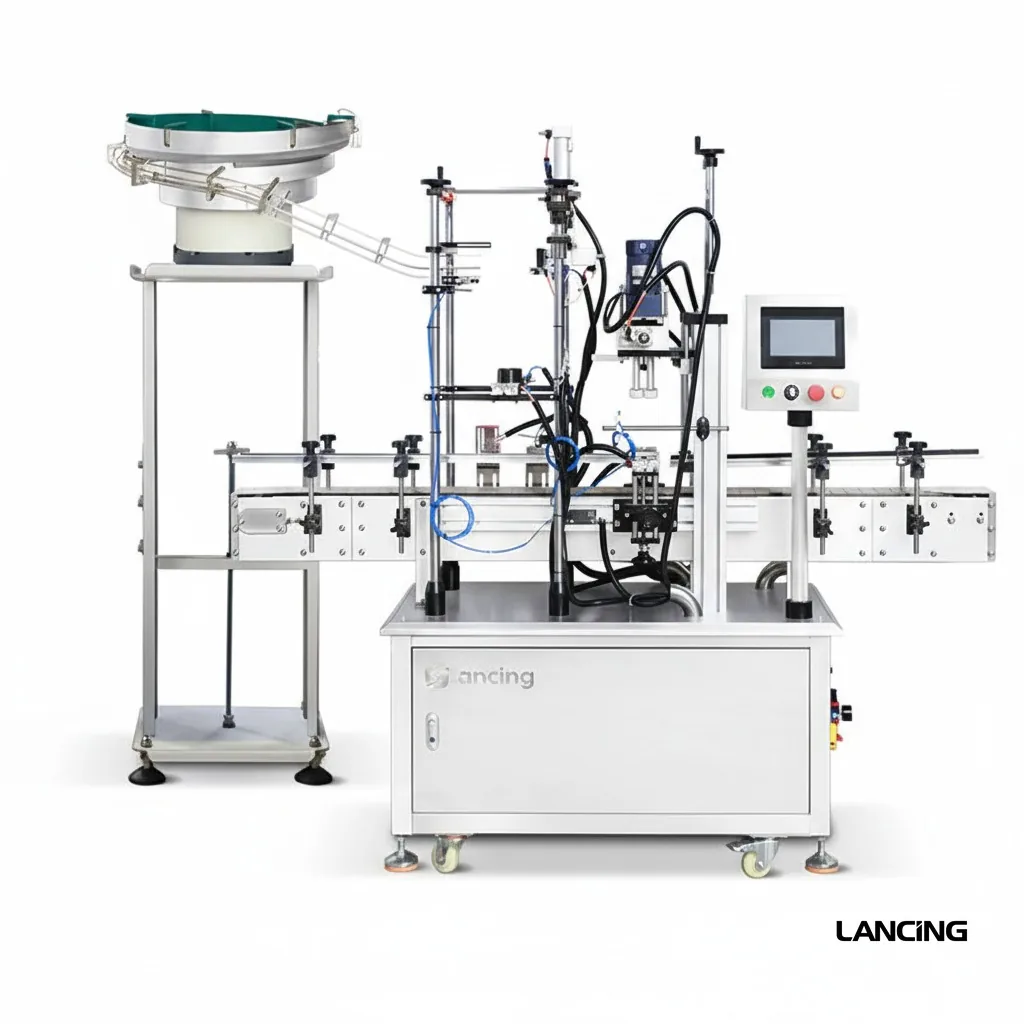
Line integration
Line layout, controls, transfer points and machine-to-machine integration for reliable production flow.
Good for matching conveyors to machines, speeds, controls and transfer heights.
Explore conveyor line integration →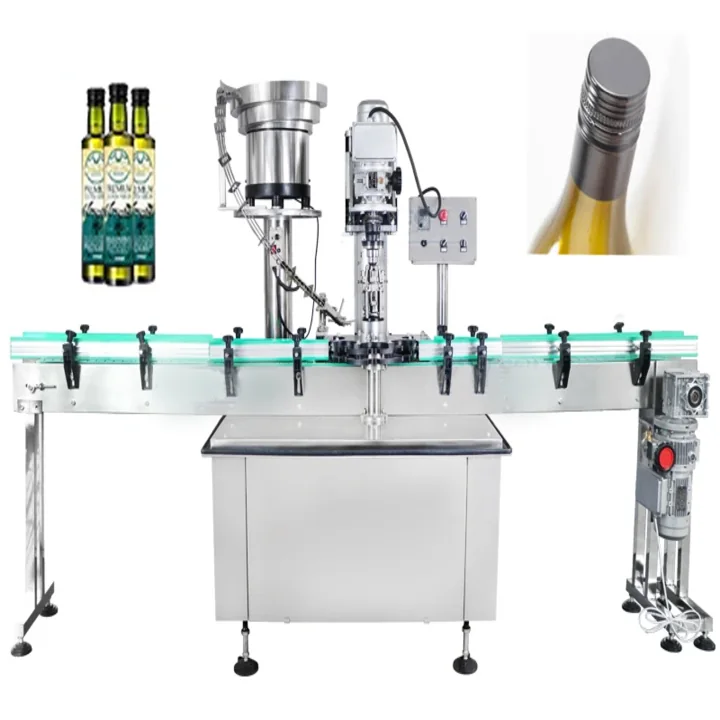
Line upgrades
Retrofit conveyors, accumulation and product-flow improvements for lines that need fewer bottlenecks.
Good for removing bottlenecks, weak transfer points and manual handling.
Explore production line upgrades →Industries
Select your industry to see handling issues that can affect conveyor choice, including hygiene, presentation, pack stability and manual handling.
Food and beverage
Conveyors for food, drink, sauces, condiments, bottles, jars, trays and packing lines.
Designed for food, drink, sauces, condiments, jars, bottles, trays and packing lines.
Explore food & beverage conveyors →Cosmetics and personal care
Handling routes for bottles, pumps, triggers, jars, labels and presentation-led personal-care packaging.
Designed for bottles, jars, pumps, triggers and presentation-sensitive packs.
Explore cosmetics & personal care conveyors →Chemical and household
Conveyors for detergents, cleaning products, chemicals, oils, lubricants, jerrycans and larger containers.
Designed for rigid containers, jerrycans, triggers, closures and heavier packs.
Explore chemical & household product conveyors →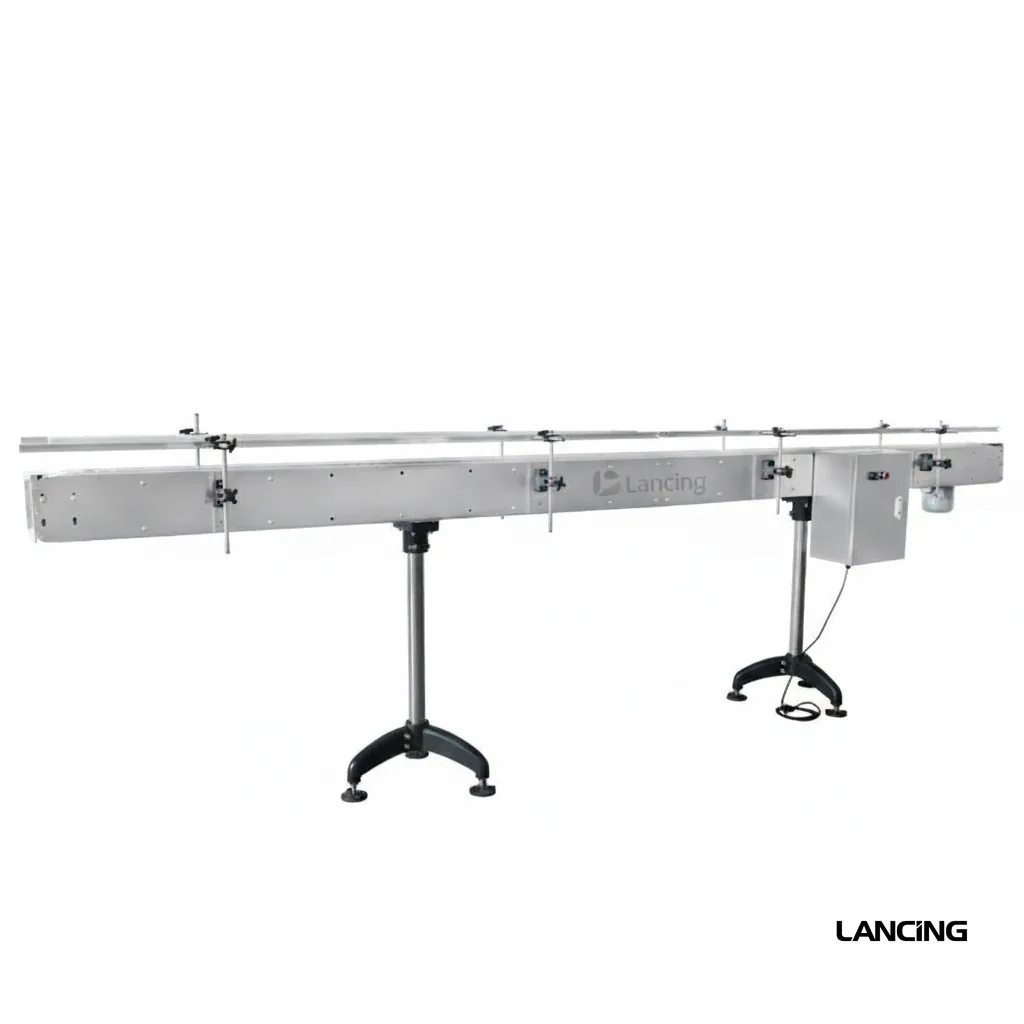
Warehouse and dispatch
Powered roller, belt and transfer conveyors for cartons, totes, picking, packing and dispatch areas.
Designed for cartons, totes, picking, packing and dispatch flow.
Explore warehousing & distribution conveyors →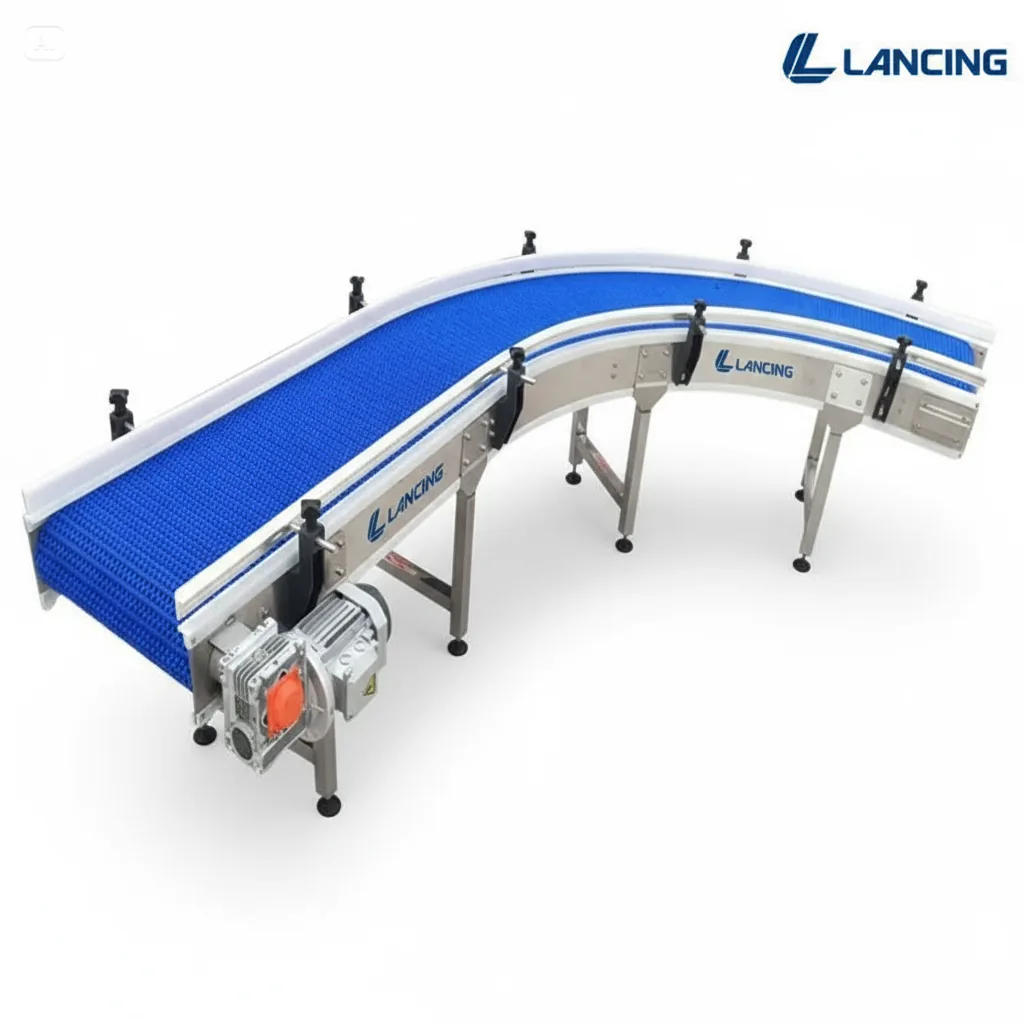
Contract packing
Flexible conveyor layouts for multi-SKU contract packing lines with frequent format changeovers.
Designed for flexible line layouts, frequent changeovers and multiple pack formats.
Explore contract packer conveyors →Quote checklist
Better project details make the shortlist faster and reduce the risk of specifying the wrong conveyor style.
Guides
Buying guide
How to choose the right powered conveyor system by product, load, footprint, speed and line requirement.
Helps compare conveyor types before you request a quotation.
Explore powered conveyor buying guide →Layout checklist
A checklist covering footprint, access, transfers, bends, elevations, guarding, controls and future growth.
Helps check footprint, access, transfers, bends, heights and controls.
Explore conveyor layout checklist →Conveyor comparison
Compare conveyor types by product stability, hygiene, load, speed, curves, transfers and maintenance.
Helps compare belt, roller and slat-chain options against your product.
Explore belt vs roller vs slat conveyors →Accumulation guide
When accumulation helps, how buffers are planned and what to check before adding accumulation to a line.
Helps decide whether buffering will reduce stoppages on your line.
Explore accumulation conveyor guide →Quote checklist
The details to send with an enquiry so the conveyor shortlist is based on real operating conditions.
Helps prepare the details needed for a practical conveyor quote.
Explore conveyor quote checklist →Frequently asked questions
Powered Conveyors UK helps specify and supply conveyor systems for packaging, production, warehouse and handling applications, including belt, slat chain, powered roller, incline, curved, infeed, outfeed and accumulation conveyors.
Start with the product dimensions, weight, stability and route. Then consider speed, accumulation, transfer points, access, cleaning and the machines the conveyor must connect.
Yes. Conveyors are commonly planned around filling, capping, labelling, coding, inspection and end-of-line packing equipment.
Send product details, target speed, line layout, available footprint, photos of the current area and details of upstream or downstream machines.
Start the project
Tell us what you need to move, where it needs to go and what the line must connect to.
Engineering selection
A useful conveyor specification starts with the item being moved and the interfaces at each end. Lancing reviews the product footprint, mass, stability, required spacing, route geometry, cleaning regime, operator access and the controls needed to connect the conveyor to nearby equipment.
| Conveyor format | Strong starting point | Checks that normally decide suitability |
|---|---|---|
| Belt conveyor | Continuous support for packs, components, cartons and unstable bases. | Belt surface, transfer gap, tracking, cleaning, incline grip and side-guide contact. |
| Slat-chain conveyor | Guided movement of bottles, jars and rigid containers. | Container base, curve radius, guide pressure, chain return, changeover and accumulation behaviour. |
| Powered roller conveyor | Cartons, trays, totes and boxes with a firm load-bearing base. | Smallest base length, roller pitch, load distribution, zone control and transfer between modules. |
| Incline conveyor | Moving products between elevations where floor-level transfer is not possible. | Rise, horizontal run, product grip, centre of gravity, cleats, side restraint and safe access. |
| Accumulation conveyor | Creating a controlled buffer between machines with different stop/start patterns. | Required buffer time, allowable product contact pressure, release logic, sensors and available footprint. |
Flow
For an initial line-flow check, conveyor speed is linked to required throughput and the centre-to-centre pitch between products. Real performance must then be confirmed with the actual pack because slip, gaps, guides and transfers affect the result.
speed = throughput × product pitch
Geometry
Measure the available horizontal run and required vertical rise before selecting an incline. At every transfer, check the smallest product base, leading edge, centre of gravity and the support available across the gap.
Drive
Drive selection is based on total resistance rather than product mass alone. Belt or chain resistance, incline lift, starts per hour, acceleration, guide friction and connected equipment all form part of the engineering review.
Send the smallest and largest product, weight range, base dimensions, target good output, route sketch, transfer heights and the make or function of adjacent equipment. Photos of the available area are useful, but dimensioned measurements are still required for manufacture and installation planning.
Where the project is a complete packaging line rather than a conveyor-only requirement, use Packaging Lines UK. For packaging-specific conveyor applications, see Packaging Conveyors UK. Dedicated empty-bottle orientation is covered by Bottle Unscramblers UK.
Conveyor project brief
Share the product, route, output target and operating environment so Lancing can review the appropriate powered conveyor format.
Engineering project resources
Use the resource path below to define the product and route, compare the motive method, agree controls, prepare the site, plan acceptance and protect long-term availability. Each guide is designed to help a buyer provide evidence for a quotation without pretending to replace the final product trial, component selection or project risk assessment.
Record product, load, dimensions, route, environment, interfaces and acceptance evidence in one controlled brief.
Build the conveyor specification →Compare positive drive, manual input, slope, accumulation and machine integration before choosing a handling method.
Compare conveyor motive methods →Define drive duty, speed range, sensors, zones, run permits, blocked states and fault recovery.
Review motor and gearbox duty →Prepare measured site evidence, FAT/SAT tests, fault records and a critical-spares register.
Prepare the site survey →Identify the smallest rigid base, largest envelope, greatest mass, highest centre of gravity, most difficult sensor target and maximum credible loaded restart. These conditions often control transfers, guides, roller pitch, drive duty and recovery logic more than the nominal product.
For existing equipment problems, use the conveyor troubleshooting workflow. For planned maintenance and downtime protection, use the spare-parts planning guide.
Browse the complete conveyor resource index for every product, application, engineering guide and service page.
Questions buyers ask at project start
These questions help separate a workable handling concept from an early estimate that still depends on product evidence, measured interfaces and an agreed operating sequence.
A powered conveyor project is usually viable when the product can be supported, guided and transferred through the required route while leaving safe access for operation, cleaning and maintenance. The first check is not motor power; it is whether the least stable product can travel through every handover without losing support or colliding with guides, sensors or neighbouring machines.
A measured route sketch, representative products and the required operating states allow Lancing to identify whether the concept needs a belt, slat chain, powered rollers, accumulation or a different handling method.
Use the pre-order suitability review to organise the evidence.
Yes, a powered conveyor can be planned around an existing room, but the usable route must be measured rather than inferred from photographs. Columns, door swings, drains, floor levels, guarding envelopes, operator positions, electrical services and maintenance access can all control the route even when the nominal floor space appears sufficient.
The layout should show conveyor centreline, top-of-conveyor heights and each machine interface. A site survey also needs to confirm how sections will be delivered, assembled and removed for future maintenance.
The smallest product base, an unexpectedly high centre of gravity, a soft or damaged underside, a height mismatch at an existing machine, a required buffer, or a cleaning method can change the conveyor type and transfer design. Product rate also changes the concept when it is supplied without the intended product spacing or stop-start sequence.
Providing the complete product range and the least favourable operating state early reduces the risk of redesign after a quotation has been prepared.
The multi-format conveyor guide explains how a product range should be reviewed.
A product trial is more useful when suitability depends on real friction, flexibility, base damage, container stability, sensor response or transfer behaviour that cannot be confirmed from dimensions alone. Drawings define geometry, but they cannot reliably predict how a soft pouch settles, how an empty bottle reacts to guide contact, or whether a carton bridges a roller gap.
The trial should use controlled acceptance observations and representative product states rather than a single convenient sample.
For further direct answers, use the powered conveyor questions and answers hub.
Engineering answers for reliable output
These guides address four decisions that frequently control availability and output: keeping a belt on its intended path, deciding whether controlled motorised-roller zones are appropriate, defining safeguarding responsibilities and balancing product flow across connected machinery.
Use a repeatable observation map to separate alignment, loading, contamination and belt-condition causes before changing settings.
Diagnose belt drift safely →Define product support, sensors, zone length, release logic and fault states before selecting motor-driven roller components.
Review motorised roller zones →Map normal tasks, foreseeable interventions, danger zones, isolation and combined-machine responsibilities.
Prepare the safeguarding review →Measure good output, product pitch, starvation, blocking, buffer use and recovery before increasing conveyor speed.
Improve line flow with evidence →A conveyor can run continuously while carrying large gaps, waiting for upstream product, releasing into a blocked process or recovering repeatedly from faults. Measure accepted product through the complete line and separate starved, blocked and fault time from ordinary running.
Record the exact product, operating state, speed, location, alarm or signal state, time to failure and recent maintenance. Safe video of the complete event and one controlled change are more useful than several unrecorded adjustments.
The handover between conveyor sections or adjacent machines often determines whether a route works for the full product range. Review the smallest, least stable and heaviest approved packs through the same route before choosing speed or drive power.
For cartons, trays and totes, examine the actual load-bearing underside rather than only the outer dimensions. Include soft, distorted or damaged bases that remain within the accepted packaging specification. Compare support at the entry, over the transport surface and across the exit gap. An item that travels well in the middle of a conveyor may still fail at the transfer.
Specify both product demand and centre-to-centre pitch. For example, 30 products per minute at a 0.4-metre pitch imply 12 metres per minute as an initial ideal speed calculation. This planning example excludes slip, changes in gaps, transfer effects and stop/start behaviour; the real pack must still be trialled. Increasing speed without reviewing downstream acceptance can simply move the queue.
Record whether product fails to move despite a run command, arrives with unstable spacing, or stops because the next station cannot accept it. Capture the first event and the related machine state through safe observation. Use that evidence to compare transfer changes, guide adjustment, control logic or buffer needs within the assessed design, rather than changing several settings at once.
Continue with Powered roller conveyor selection · Transfer and layout details · Conveyor troubleshooting workflow · Roller conveyor cost factors.
Describe where the product starts, where it must arrive and what a person or machine does at both ends. Include the normal presentation, orientation and delivery height. This turns a request for a conveyor length into a clear handling requirement and helps compare belt, roller, slat-chain and other routes against the actual task.
Treat the product range as a set of handling cases. A small firm box, a flexible pack and an unstable bottle may share a production area without sharing the same support needs. Identify the minimum supporting footprint and the heaviest load, then show bends, transfers and elevation changes where those cases need assessment. Retain the sample references with the layout.
Define what controlled flow means for the operation. Some processes need a steady stream, others need separated products or a queue that waits for the next station. Explain how the route starts, stops and recovers when a station is unavailable. Review those states before deciding how much accumulation or automation belongs in the conveyor scope.
Map the repeated task, product, pickup and delivery points, then assess how a conveyor would change the complete workflow.
The intended product range, route, transfers, controls, supporting equipment and installation responsibilities should be clear.
State which downstream event the buffer should absorb and how long it normally lasts. For an illustrative flow of 45 packs per minute, a 20-second interruption creates demand for 15 pack positions before other allowances. This is an initial capacity calculation, not a conveyor specification; the upstream stopping sequence and packs already in transit also matter.
Use the actual product dimensions and intended gap or zone arrangement to estimate occupied length. Bends, transfer gaps, unavailable zones and the space needed to release packs can reduce usable capacity. Confirm whether the package tolerates contact or needs separated accumulation; a nominal conveyor length does not establish safe storage of every pack.
A buffer only empties if the receiving process can temporarily take product faster than new product arrives, or if upstream flow is reduced. If both stages resume at the same rate, the accumulated queue can remain. Describe the release sequence, spacing and response to another stop before the buffer has recovered.
Agree what happens at nearly full, full, empty and unavailable-sensor conditions, including which connected stage receives the signal. Have the complete transfer and safeguarding arrangement assessed for the installation. Continue with line balancing and controlled roller zones rather than selecting accumulation from length alone.